|
DATSUN-NISSAN REBUILD TIPS
L-SERIES
|
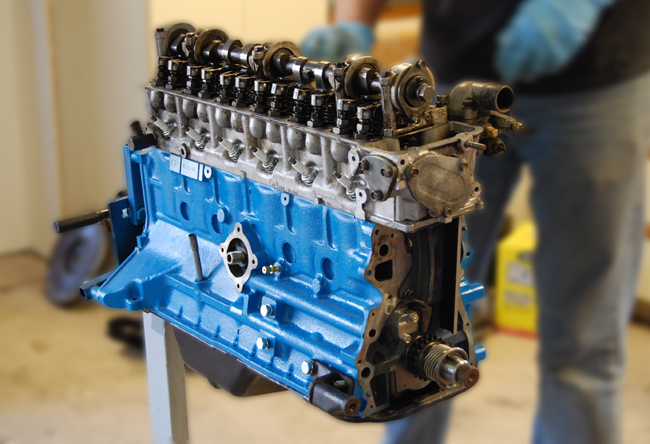 DATSUN ENGINE
PARTS SOURCES
DATSUN ENGINE
PARTS SOURCES
NISSAN DEALER
In 1996 I remember my local Nissan dealer had the original microfiche and was still able to get quite a few factory parts. I had them order a set of original metal "240Z' pillar badges which actually arrived and quite a few other obscure parts. Then in 1997 Nissan began their restoration program of rebuilding 200 vintage 240Zs for showroom floors. This was to promote the release of the "350Z". The downside is that it stripped all the remaining original Z parts from Nissan parts bins. You may be able to find some generic bearings and pieces if you know the parts numbers. But in late 2024 Nissan was in talks mto be acquired by Honda. It was nice while it lasted.
ROCKAUTO
Rather than scour parts bins the best source for Nissan mechanical parts is Rockauto.com. Sometimes you can find oddball parts like new flywheel, rebuilt distributors, and more.
BECK-ARNLEY
Beck Arnley has been a parts distributor since 1914. Due to their high quality and Nissan-like prices, I've always suspected they import and rename parts from the same sources as modern day Nissan. A timing chain set of theirs I purchased in 2006 was labeled "Made in Japan", a welcome surprise. A main bearing set I bought recently was labeled "ACL" of Australia which is highly respected. I've always trusted Beck parts for their high quality...even if its hard to know exactly who made the part. Rockauto used to carry Beck Arnley Datsun/Nissan parts.
FEDERAL MOGUL
The American company Federal-Mogul of Michigan owns nearly every other aftermarket company: Sealed Power, Speed Pro, Fel-Pro, Champion, Carter, Ferodo, Wagner, Moog, Wagner, National, Precision, Abex, Anco, and supposedly Crane Marine. This gives Federal Mogul a huge inventory to draw from for Z parts. However, they declared Chapter 11 in 2003 due to asbestos claims. Since the 2009 meltdown of American car companies, you can bet that L-series parts are becoming less of a priority for them. Buy 'em while they last.
BORG-WARNER (BWD)
Borg Warner was well-known for their transmissions but today is a niche company nowadays and concentrates on high-quality electrical items such as voltage regulators and ignition parts. Their distributor caps and rotors use desirable brass contacts and I bought a 240Z mechanical voltage regulator a while back which was very high quality. Borg-Warner doesn't support T5 transmissions anymore, they sold the rights to Tremec in the 1990's and won't even respond to questions on them.
DANA and CLEVITE
Dana is the parent corporation of Clevite and in March 2006 declared Chapter 11 bankruptcy. Napa used to carry Dana parts which consisted mainly of bearings sets and pistons parts. Clevite made an OEM L-series camshaft I bought from Black Dragon Auto a few years ago.
JC WHITNEY
JC Whitney is just a catalog company with about a zillion suppliers, they don't produce or manufacture anything. When you buy engine parts, headers, tools, performance parts, you're just getting the aftermarket brands listed above. No secret underground line of parts.
THE REBUILD
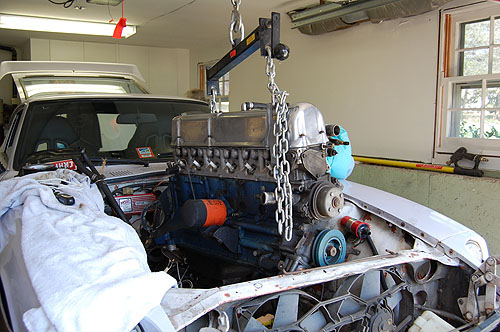
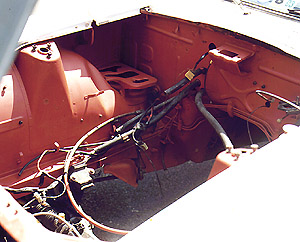 Ready for the project to begin |
While the Datsun rebuild manuals show you the procedures, they don't discuss the principles of engine rebuilding. For that check out a few Hot Rod type magazines and study their engine rebuilding tips. V8, L28, the basic concepts are all the same. For Datsun get both the Chilton and Haynes manuals since taken separately they tend to be incomplete. The Chilton mainly covers replacing, not troubleshooting while the Haynes is a British version with peculiar photos. But between the two you can usually sort out a procedure. My favorite is an older book by Clymer which had excellent detailed diagrams and troubleshooting and even a fold-out electrical schematic in back. Sadly, it's out of print.
L28 BLOCK CHOICE
According to Nissan, there were 2 different L28 blocks, '75-80, and '81-83. The early L28 block is stamped N42 to the right of the driver side motor mount while the later block is a F54 with "siamesed" cylinder bores. Siamesed means that instead of each cylinder wall standing "free", additional webbing supports were cast between the cylinders 1-2, 3-4, 5-6 to increase rigidity. While the factory says neither is better for racing, newer is better in my book.
 |
 |
PISTONS-RINGS-RODS
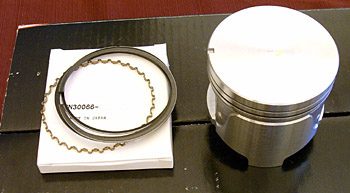
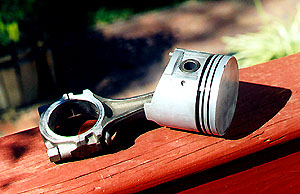 Flattop piston from F54 block |
BALANCING
A Z engine is not same as a small block Chevy, yet people insist on using the same rebuilding folklore that their grandfather used. There are 2 "types" of balanced car engines. Those that are "Internally" balanced and those that are "Externally". Datsun L-series "ZCAR" engines have been internally balanced since the car's inception.
- INTERNAL drills holes in the crank counterweights to balance it while the pistons and rods are prebalanced at the factory.The flywheel and front pulley are separately balanced and can be changed without affecting rod/piston/crank balance in the engine.
- EXTERNALuses an unbalanced crankshaft with frequently unbalanced pistons and rods. A front "harmonic balancer" and counter-weighted flywheel are used to smooth things out and dampen vibrations.Change one and the whole rod/piston/crank assembly can go out of balance.
Datsun designed the Z as a 7,000 rpm sports car and as a result supplied it with a forged steel crank and steel rods. This design worked well since inline-6 engines are considered one of the best balanced of all the auto engine designs, with nearly perfect Primary and Secondary balance characteristics. "Primary" balance is achieved by tight weight-matching of parts. "Secondary" balance has to do with the phasing and rotating mechanics of the piston/crank.
V8s can be Internally balanced to create good Primary balance, but the V design can produce Secondary balance problems because a piston and counterweight are always off axis. This is why a machine shop asks you to bring in "everything" (crank, pistons, rods, flywheel) when you want a V8 engine balanced: they use a complicated series of plumb-bob weights on the assembly while rotating it at typically 900rpm. Because an inline 6 has everything moving in the same plane it has excellent Secondary balance...all you need to do is make sure the crankshaft is balanced and the pistons/rods are identical in weight. At rebuild time you should still get both the crank and pistons checked at the machine shop. But on my last four L28 engines I have never had a factory part needing re-balancing. Go Nissan!
| A crankshaft with only two ounce-inches of imbalance at 2,000 rpm will be subjected to a force of 14.2 lbs. At 4,000 rpm, the force grows to 56.8 lbs. Double the speed again to 8,000 rpm and the force becomes 227.2 lbs. |
As you see in the V8 factoid above, this is where engine balance is critical because even the slightest out-of-balance piston/rod throws off the balance on the whole assembly...next thing you know you've thrown a rod through the block. Just picture an unbalanced gyroscope running at a high speed! Detroit didn't help matters by producing V8 engines that were externally balanced, sometimes even in the high-performance versions. Why? Likely because forging steel parts and balancing thousands of engines on an assembly line was expensive and time-consuming. As a result many V8 crankshafts and rods were made of weaker nodular or cast iron. Because of the quality metallurgy Nissan L-series Z motors easily turn over 200k miles while American ones of that era were lucky to see 100k.
CONNECTING RODS
Datsun connecting rods were matched as a set at the factory. Racers like to grind and polish them (Chevy folklore again) but checking the balance is all that's necessary for the street.The factory says to replace the rod-bolts on every rebuild, but if you're being cheap you can get by with re-using the stock bolts. I've built 3 motors reusing the stock bolts, which I have driven very hard with no problems. But for my newest rebuild I went to Summit Racing and got a set of ARP rod bolts, part# ARP-202-6003 which will last forever. Some people insist that you should get the big ends of your rods recut and resized at rebuild because they will be out-of-round from heavy use. This is another holdover from muscle-car days when cheap connecting rods always needed resizing at rebuild time when the big ends were oval from the pounding of an unbalanced engine. While I'm sure some Datsun rods have required resizing I wouldn't consider it a must. My machine shop laughed when I asked them to do mine...they said forged Datsun/Nissan rods are so stout it's not an issue but checked mine anyway. They were perfect.
CLEANING
When cleaning off the hard carbon on the piston tops, don't use a wire brush on a drill or you'll grind into it. I let the tops soak in carb cleaner for a while and then use a Scotchbrite pad. Don't use a cheap sponge with Scotchbrite, use a real Scotchbrite pad. It takes a while to get it all off but be patient. Use a piece of broken ring to clean out each groove, and make sure the grooves are PERFECTLY clean with no burrs. Lightly polish the skirts till they gleam, make sure no sharp edges are present that could scratch the cylinder wall.
RING TYPES
There are three types of piston ring materials used on the face of top rings for automobiles: cast iron, moly, and chrome.
MOLY Molybdenum is very porous which results in more retention of oil in the face of the ring and also has the highest melting point of the three types. In continuous high speed or severe load conditions moly faced rings are considered the best choice because of high scuff and scoring resistance. I've read that stock Nissan top rings were moly and I think Arias currently makes moly rings for L-series motors.
CAST IRON According the Nissan "Honsowetz" L-series rebuild book, cast iron rings are a good choice for the street in Nissan motors. For typical driving where the car is not subjected to long periods of high speed or on paved streets, plain cast iron is considered very durable. While there is nothing wrong with cast iron, it seems to be used more for stock replacement applications than high performance like chrome and moly. The Beck-Arnley rings I've used appeared to be cast iron.
CHROME These are recommended for a "dusty environments such as offroad racing". I'm not sure why dust is assumed to be in the cylinders, but chrome's smoothness and hardness keeps dirt from impacting into the face of the ring which can cause cylinder wear. Its resistance to scuffing and scoring is higher than cast iron but somewhat less than moly and it requires a special honing finish on the cylinder wall because chrome is so smooth. Sealed Power, Total Seal and AE Clevite makes chrome rings for the L-series. ITM replacement pistons are listed by ITM as having top chrome rings with cast iron 2nd rings.
Moly rings are considered the "best" for high performance as they seal well, resist scuffing and are used on nearly all modern performance motors. Cast iron is very durable and seals well, I've used them on the last three motors with no problems. Chrome is good for performance too but requires a special hone finish in the cylinder to break in properly. I wouldn't lose sleep over which is best, buy what makes you feel most comfortable.
ITM .5mm versize flattopRING INSTALLATION
<Ring oiling: The 45 year old Haynes 240Z repair manual says to "liberally" oil the pistons before install which was changed to "lightly" in the later 280ZX version of the book. Confused, I called and spoke to a tech at Total Seal Piston Rings and asked his advice on installing rings. He was emphatic that rings should be broken in "dry"with only a light film of oil on the cylinder wall, no dipping the piston tops in oil like some old books show.
Don't try to install or remove piston rings with your fingers, spend $5 and buy a piston ring spreader. It makes installing them much easier, and reduces any scoring of the piston as well as the possibility of breaking one (as no-one sells single piston rings).
I agree. Except for what sits in the cylinder crosshatching, oil does not make it up past the oil control rings under normal conditions. So if you use the the old-timers practice of dipping the piston-top in a bucket of oil before install, it can clog the ring lands and glaze the rings during break-in. So I lightly pre-oil the edges of the rings and the cylinder wall but that's it. You should make sure the piston skirts are oiled to prevent scuffing however. But no need to be paranoid: as soon as you turn the engine over the skirts and cylinder walls get lubed automatically.<>BOTTOM END
>BORING
The max safe overbore on a L28 is said to be about .060" although the riskier people have gone out to .100" or higher. NOTE: scrimp on other things but get your block bored properly. Otherwise you will live with blowby and reduced horsepower until it's bored properly someday. A quality shop will try to leave about .004" of material unbored to be used up when they hone the cylinder. So if you decide to get your block bored ask them how much they leave on for honing. If they say it doesn't matter go somewhere else.
HONING
FLEX-HONE If you want to hone it yourself try a "Flex-hone" made by the company Brush Research. It looks like a bottle brush with a stone on the end of each bristle. It fits into your power drill and lets you hone each cylinder yourself for 10-30 seconds. This de-glazes the wall and creates new crosshatching for rings to seat. The crosshatching should appear at a 45 degree angle to maintain oil.
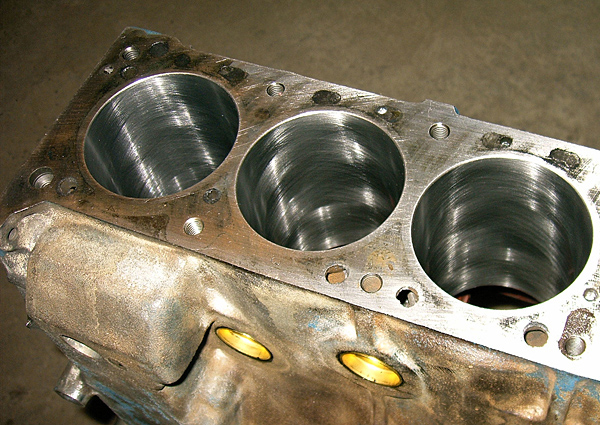
Nissan cylinder bores are very tough nickel-steel. While old American engines commonly require a rebore, it's very common to open up a 30 year old Nissan motor with 200,000+ miles to find the factory crosshatching intact in the cylinder walls. As a result it's not always necessary to rebore the cylinders unless you have the need for an oversize piston. If you decide to simply add new rings you can usually get away with honing the cylinders to roughen or "de-glaze" them. This is standard engine rebuilding practice that's been done for decades and when done properly produces good results. However, if you have a scratch running top to bottom that's deep enough to catch your fingernail you should get a rebore. If you use a honing tool long enough to take out a deep scratch it will take off too much metal and cause concentricity problems.
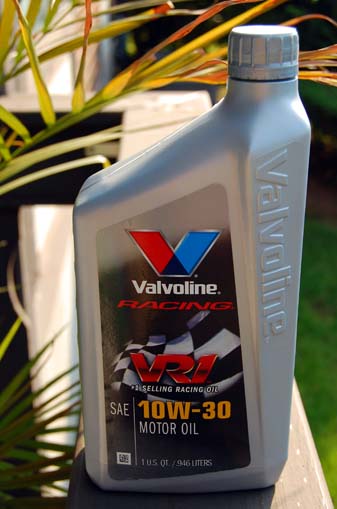
The model to buy for a L28 (86mm) cylinder is the GBD-3 1/2" (89mm) with a silicon carbide stone. I use a 240 grit which is their finest for honing. My machine shop used to recommend carb cleaner as a cutting oil, but but Flex-Hone says to only use a 10W-30 or their own brand cutting oil. I have used their special Flex-Hone oil for mine with great results. align="center">
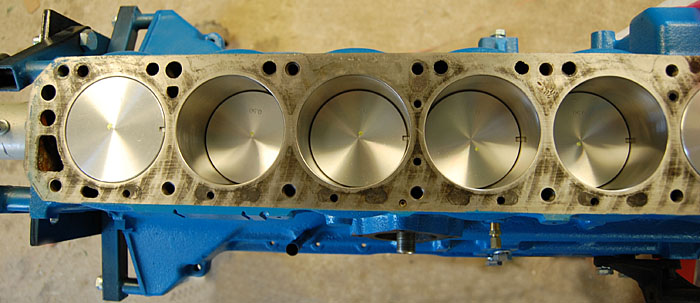
F54 bored out .5mm with new pistons GLYPTAL PAINTING
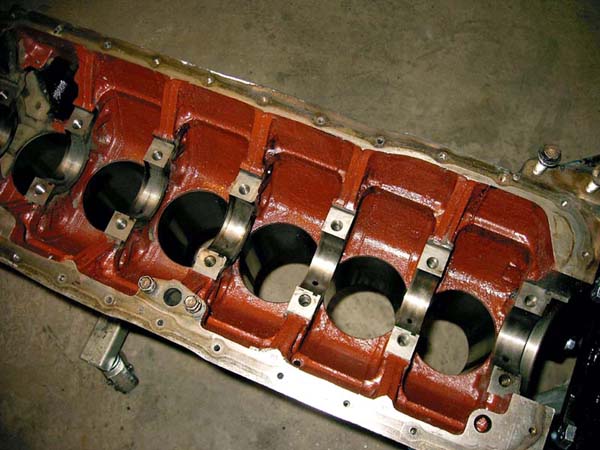
After cleaning off casting flash and grinding down any sharp edges in the crank area of the block, you might consider painting the interior with Glyptal. Glyptal has been made by GE since 1924, and is mainly used as a heavy enamel for armature windings on generators. For years racers and vintage engine rebuilders have been using it to coat the interior of blocks at rebuild time. Oddly, web opinions are few and everyone quotes exactly the same benefits: "...to seal the metal pores, and aid in oil runoff". To be honest I've never thought of those as problems needing solutions in a car engine, so here are my own reasons to paint the block interior: "...to prevent sludge from adhering to the metal surfaces, the added peace of mind that you've prepped the interior of block and sealed any grit... and that it looks great".'ve seen photos of people lining cylinder head valleys, timing covers, etc with the stuff. Personally I feel that the block interior is the only area that should be painted and that the bearing caps should remain uncoated. I leave the bearing caps uncoated as it worries me that oil might get under the sharp bearing edges and bolt contact surfaces and lift the enamel. However, an engineer friend of mine says his company paints the insides of the magnesium transmission housings of their helicopters with Glyptal. And if it ruined the engines of high dollar auto-restorations I think we would have heard horror stories by now. Of course you should grind and prep the metal to make it adhere well and use brake cleaner to clean all the grease off before painting. Eastwood carries cans of Glyptal. Might seem pricey but a little goes a very long way. IMPORTANT NOTE: as durable as Glyptal is when dry, spraying brake cleaner on it makes it bubble and dissolve into shreds very quickly which is disconcerting. Motor oil doesn't have the same solvent properties, but l'm surprised that this has never come up before that it's so sensitive to solvents. Something to keep in mind. CLEANING BORES When cleaning out honed bores use a shop towel which is typically made of lint-free cotton, don't use paper towels which are really just sheets of compressed wood fibers that can remain in the metal grain. And instead of using WD40 or brake cleaner an old trick is to use ATF (auto transmission fluid). ATF is a 10 weight oil with high-detergent properties with an unusual feature: When used to clean metal parts it seems to pull up residue that nothing else will. On my last rebuild I thought the honed bores were clean, but after running a shop towel with ATF through it came out with gray residue. Mysterious and very cool. CRANKSHAFT
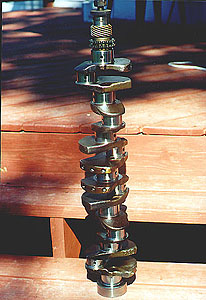
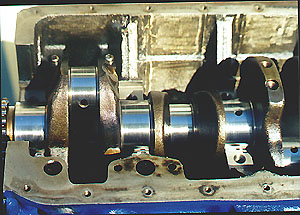
recision forged steel, this is the very heart of a Z motor. With the stout 7 bearings it's mainly responsible for the longevity and durability of these engines. Japanese crankshafts are generally perfectly balanced, and these are no exception. But if you're doing a rebuild, it's worth getting it checked and journals polished by the machine shop. The last one I had checked had 140k miles on it...the shop said it needed NO balancing at all. The rod/pistons from it's motor were all within 1/2 a gram as well. Let's see an American car company from 1983 manage that one! All the shop needed to do was polish the bearing journals on the crank.
As tough as crankshafts are you should be careful if standing it on end while storing. The reason is that if it falls over and whacks the floor it can bend the crank enough to throw it out of balance. This is especially true on long, in-line 6 crankshafts. CAM CHAIN TENSIONER
As you probably know, there's a chain-tensioner deep down inside the front cover. This little item presses tightly against the cam chain and is a real problem if you take the cam sprocket off without wedging the chain in place...you'll find that suddenly the timing chain is too short. This is because the slack is taken up as this tensioner pushes against the chain. I've heard of some people levering it back with a long screwdriver but I don't trust that. If you messed up the chain timing, you should remove the front cover and reposition everything to be sure its correct. A few hours work unfortunately. FRONT COVER
Since the oil and water pump are here the mating surfaces on the cover must be spotless upon installation, otherwise you will have an oil or water leak. It's very hard to get the old gaskets off so spend extra attention here. The best method is to use gasket removal spray and then a sharp razor blade to slice off the old gaskets...be careful not to gouge the aluminum. Then follow it up with fine emory paper on both the cover and engine block surfaces. Use a brush-on gasket sealer like Permatex 300 to seal it tight as a drum.Before install you should tap out the threads on the front of the block. The original bolts get pretty cruddy, so I would use new ones. As recommended by the factory, put an extra spot of sealer in each corner of the cover to seal against pan oil leaks. NOTE: be very careful when removing the distributor and/or water outlet base bolts. After 35+ years they get frozen in and will break off in the aluminum easily. The distributor base is usually removable, but be wary of the water outlet bolts because it will ruin the cover if you break one off.
FRONT BALANCER
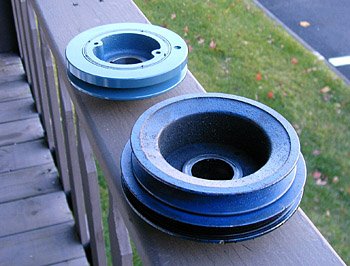
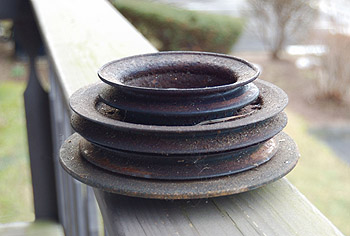
Unless you have a need for AC and power steering and have no choice get rid of your 3-row pulley and replace it with a 2 or 1-row. I've weighed all three and here are the weights. I'm not going to get into the argument over whether using a smaller one increases performance, the weights are below.
>3-row: 8 pounds
2-row: 6 pounds
1-row: 3.5 pounds
One row and two row
No comment
CYLINDER HEAD